Cybercrime & Technology

Attorney General Kamala D. Harris Announces Creation of eCrime Unit Targeting Technology Crimes

December 13, 2011
Contact: (916) 210-6000, agpressoffice@doj.ca.gov

SAN JOSE -- Attorney General Kamala D. Harris today announced the creation of the eCrime Unit, staffed with Department of Justice attorneys and investigators, and charged with identifying and prosecuting identity theft crimes, cyber crimes and other crimes involving the use of technology.

“Today’s criminals increasingly use the Internet, smartphones, and other digital devices to victimize people online and offline,” said Attorney General Harris. “I am creating the eCrime Unit so that California can be a leader in using innovative law enforcement techniques to target these criminals. The eCrime Unit will be comprised of investigators and prosecutors charged with working across jurisdictions and leading task forces to protect California consumers and businesses.”

The eCrime Unit investigates and prosecutes crimes that include a substantial technology component. Examples and descriptions of the kinds of crimes that the unit will prosecute are:

• Identity theft – The Internet provides new ways for criminals to steal personal information and identities whether through email phishing scams or trolling the Internet for personal information about others.
• Fraud committed using the Internet – This includes scams perpetrated via email and on Internet auction websites.
• Theft of computer components or services – Burglary and robbery of computers or other electronic devices by highly-organized gangs at manufacturing sites, storage facilities and retail stores.
• Intellectual property crimes, such as counterfeiting or piracy – Large numbers of websites and online networks exist solely for the unauthorized distribution of copyrighted material, such as movies, music and software.
• Child exploitation – Disrupting online child pornography networks and those who commit sex crimes against children using the Internet or social media.

Many of these crimes are multi-jurisdictional and are better suited for prosecution on a statewide level. The eCrime Unit, which began operations in August, consists of 20 attorneys and investigators, many of whom have spent years working on complex technology crimes.

Technology crimes affect consumers, businesses and the state government’s operations. California had 10 of the top 25 metropolitan areas for identity-theft related consumer complaints in 2010. According to the Federal Trade Commission, California has the most identity theft complaints of any state and third highest per capita. In fact, every year, more than 1 million Californians are victims of identity theft. Total losses throughout the state exceeded $46 million last year.

“Every year, California loses millions of dollars because the intellectual capital of our state is being hijacked by criminal elements,” said Assemblywoman Nora Campos, D-San Jose. “The addition of the eCrime Unit to California’s fight against technology crimes sends a clear message that we are determined to root out this type of illegal activity.”

The eCrime Unit will also provide investigative and prosecutorial support to the five California regional high-tech task forces funded through the High Technology Theft Apprehension and Prosecution Trust Fund Program and provide coordination for out-of-state technology-crime investigation requests. The eCrime Unit also will develop and provide training for law enforcement officers, prosecutors, the judiciary, and the public on cyber safety and the importance of strong information-security practices.

“As the importance of the Internet to our economy has grown, criminals have moved online to steal valuable information and goods from individuals and businesses,” said Santa Clara District Attorney Jeffrey Rosen. “In the 21st Century, law enforcement will be increasingly combating online criminal activity. The Attorney General's eCrime Unit will provide much needed resources and expertise to thwart and prosecute online criminals who cause billions of dollars in damage every year.”

Attorney General Harris outlined several cases that exemplify the work of the eCrime Unit. In July, George Bronk, a Sacramento-area man was sentenced to more than four years in state prison after hacking into email addresses and Facebook accounts of victims by finding answers to email security questions. He found indecent pictures and video and then blackmailed the victims. The victims in this case were located in at least 17 states and United Kingdom. More information on the case can be found http://www.oag.ca.gov/news/press_release?id=2541&y=&m=6

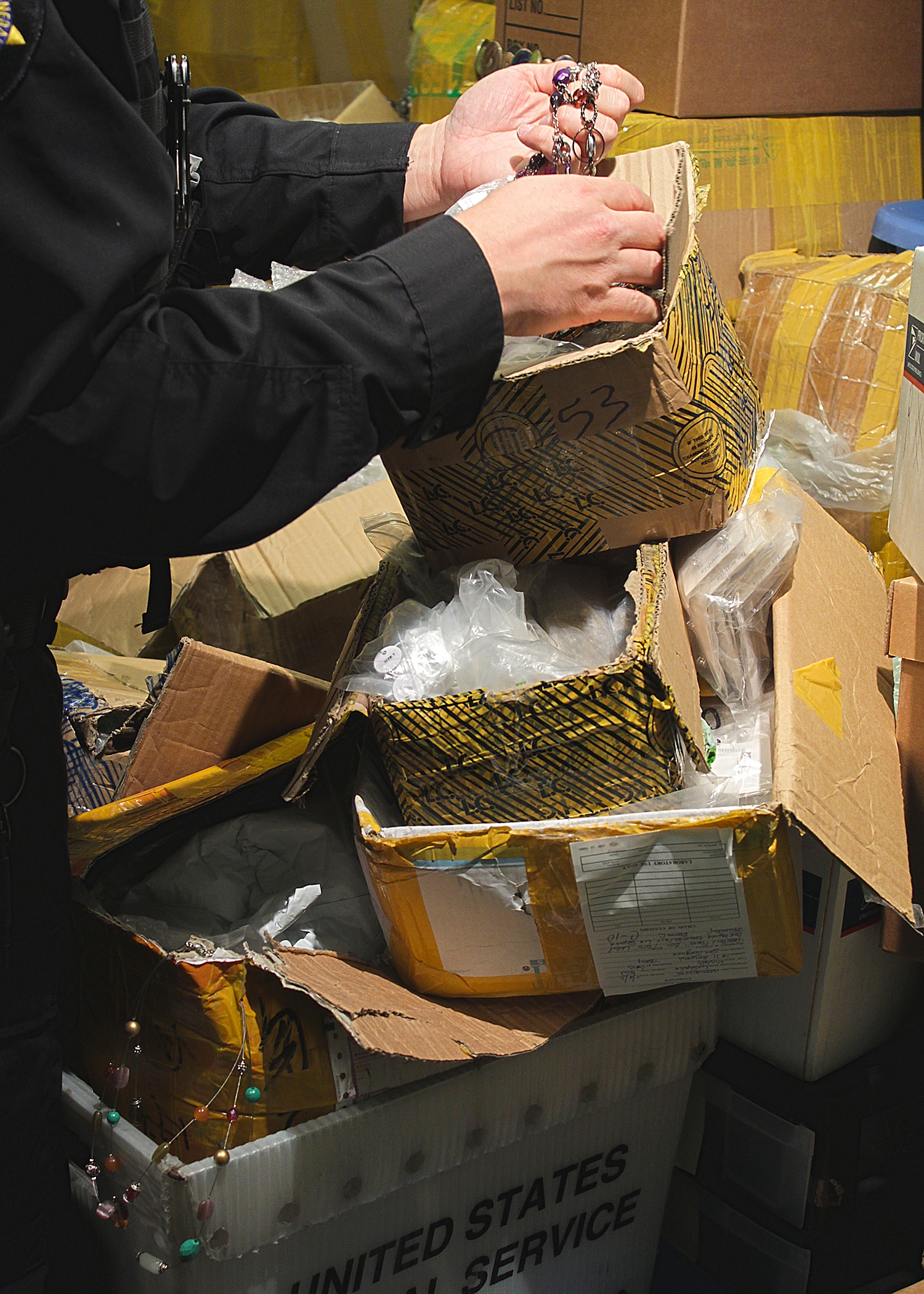
Attorney General Harris also announced the filing of five felony charges against Chen Zhang on December 8, 2011, in San Joaquin Superior Court. Zhang is being charged with possession of unauthorized and counterfeit jewelry from five different companies. Investigators for the Attorney General’s Office seized an estimated $1.5 million of counterfeit goods from her residence in Tracy, California on November, 3, 2011. A copy of the complaint, and photographs of the counterfeit jewelry, are attached to the electronic version of this press release.

In another case, defendants allegedly ran an identity theft scam at ATM vestibules across seven counties. They allegedly used a card reader to capture victims’ card numbers and a hidden camera to capture the PIN numbers. Total losses are estimated to be $2 million. The case (California v. Aroutiounyan) originated in San Luis Obispo County, but the Department of Justice eCrime Unit was able to investigate and charge the entirety of the scheme across all seven counties.

The Attorney General also announced the launch of a new web site devoted to cyber safety, which can be found at http://oag.ca.gov/cybersafety. The website contains information about online child safety, identity theft prevention tips and help for victims.

AttachmentSize
Image icon n2598_photo_1.jpg2.78 MB
Image icon n2598_photo_2.jpg2.42 MB
PDF icon n2598_comlpaint.pdf120.87 KB
PDF icon Charts1.1 MB

Social Media Stalker Sentenced to Four Years in State Prison

July 27, 2011
Contact: (916) 210-6000, agpressoffice@doj.ca.gov

SACRAMENTO -- Attorney General Kamala D. Harris announced today that George Samuel Bronk, 23, of Citrus Heights, was sentenced on Friday to more than four years in state prison for stalking women on the social networking site Facebook.

Bronk plead guilty in Sacramento Superior Court to seven felonies, including computer intrusion, false impersonation and possession of child pornography. Bronk received four years, eight months in state prison and will have to register as a sex offender.

"For all of the conveniences the Internet offers, it has also opened a new frontier for crime. Cyber-predators, like Mr. Bronk, must be held accountable for their criminal activities,' Attorney General Harris said. 'Let this be an example for all those who will stoop to steal other people's identities.'

From December 2009 through September 2010, Bronk accessed e-mail accounts and Facebook pages of people in 17 states, as well as residents of England. He essentially found answers to the women’s e-mail security questions in information they had posted on their Facebook sites.

Bronk searched the victim’s “sent mail” folder for nude or semi-nude photographs and videos, which he often sent to the victim’s entire e-mail address book. He also gained access to some victims’ Facebook accounts by clicking the “Forgot Your Password?” link and asking for a new password to be sent to the victim's e-mail account, which he now controlled. In many cases, he posted the photographs to victims’ Facebook pages and to other Internet sites and made comments on the Facebook sites of friends.

Superior Court Judge Lawrence Brown rejected a defense request for probation and sentenced Bronk to state prison. Judge Brown sentenced Bronk to four years in state prison for the crimes of computer intrusion and false impersonation and then added an additional consecutive term of eight months for Bronk's possession of child pornography.

The investigation began after one victim contacted the Connecticut State Police, and the agency then contacted the California Highway Patrol because the suspect appeared to be operating here. The CHP requested the Attorney General's assistance.

On the hard drive of Bronk’s desktop computer, which was confiscated from his Citrus Heights home during a search in September, investigators found more than 170 files containing explicit photographs of women, including a film actress, whose e-mail accounts he had commandeered. Finding victims, however, proved a challenge. CHP and Attorney General agents were able to use location tagging information embedded on the photographs on Bronk’s hard drive to assist in identifying victims, and e-mailed 3,200 questionnaires to potential victims asking them to come forward.

Some 46 victims did, including one who described Bronk’s actions as “virtual rape.”

Former City Council Candidate Sentenced to More Than Six Years for Jailhouse Threats Against Prosecutors

May 3, 2011
Contact: (916) 210-6000, agpressoffice@doj.ca.gov

VENTURA – Daniel Avila, a former candidate for the Thousand Oaks City Council has been sentenced to six years and four months in prison for threatening to kill six prosecutors in the Ventura County District Attorney’s office.

Avila was convicted of six counts of making criminal threats and six counts of threatening public officials on April 4 in Ventura County Superior Court. He was sentenced yesterday. The case was prosecuted by Deputy Attorney General Jonathan Kline.

“As the chief law enforcement officer of California,” Attorney General Kamala D. Harris said, “I take very seriously any threat against prosecutors or police officers. They are the ones charged with keeping the public safe, so their own protection is doubly important, and violators must be punished. The result in this case achieves both objectives.”

Avila ran for the Thousand Oaks City Council in 2004, and was charged with hacking into the Verizon wireless system and sending bogus text messages to thousands of residents between midnight and 4 a.m. in the name of a fellow candidate. The District Attorney’s office filed charges including computer fraud and identity theft against him.

While he was in jail on those charges in 2008, Avila threatened in a phone call to kill one prosecutor, and wrote letters to five female prosecutors threatening to rape them, kill them with a fishing knife and burn their bodies with lighter fluid.

Avila has been in custody continuously since March 2006, including two stints in mental hospitals. The sentence gives him credit for 279 days served on the current charges, which means he must serve more than five-and-a-half additional years.

Attorney General Kamala D. Harris Announces Convictions of Hucksters Who Stole $8 Million in a Phony Online Rewards Scheme

April 18, 2011
Contact: (916) 210-6000, agpressoffice@doj.ca.gov

RIVERSIDE - Attorney General Kamala D. Harris announced that two men who stole millions of dollars through phony stock sales and an illegal pyramid scheme were convicted today on charges of grand theft and securities fraud.

James A. Sweeney, II, 64, of Afton, Tennessee, and Patrick M. Ryan, 35, of Canyon Lake, California, were found guilty on 65 counts of grand theft and securities fraud. The two men, who face a maximum of more than 20 years in state prison, will be sentenced June 14 in Riverside County Superior Court.

Sweeney and Ryan, co-founders of Riverside-based Big Co-op, Inc., stole approximately $8.2 million from more than 1,000 Californians through an illegal pyramid scheme and phony stock sales.

Big Co-op, also operating as Ez2Win.biz, purported to be an online shopping hub where consumers could go to purchase thousands of goods and services at discounted prices from big-name retailers including, Sears, Target and Macy’s.

Pyramid Scheme

Consumers were informed they could save money on their own purchases, plus earn commissions and rewards, by convincing others to shop at the site. In reality, consumers never received rebates or rewards. Instead, their monetary gains were based on recruiting others to purchase memberships, and having those purchasers recruit others to purchase memberships (and so on).

Individuals who were recruited paid Big Co-op between $19.95 and $99.95 in monthly membership fees for the rewards program.

From 2005 to 2006, Big Co-op generated $1.2 million in revenues through this pyramid scheme.

Phony Stock Sale

In addition to the pyramid scheme, the two men sold phony stock in Big Co-op as a stand-alone investment.

At seminars and meetings across California, Sweeney and Ryan pitched Big Co-op as the future of online commerce, compared it to Google and EBay, and falsely informed investors the company was turning huge profits. Investors were also told that an initial public offering (IPO) was imminent, and that when the company went public, the stock would double or triple and their investment could climb to well over $100 per share.

In reality, Big Co-op was never profitable, there was not an impending IPO, and the only significant revenue generated was as a result of the sale of phony stock and the payment of membership fees for the pyramid scheme.

Shares in the company were sold for $0.50 to $5.00, with two-for-one deals offered to investors willing to pay cash. From 2005 to 2006, Big Co-op took in more than $7 million from this scheme.

With investor cash, Sweeney and Ryan bought luxury homes, country club memberships, five Mercedes, and ran up $30,000 to $50,000 in monthly credit card bills. Investor funds were also used to pay for an elaborate bachelor party in Las Vegas, a $23,000 wedding ring and a $100,000 wedding.

In October 2006, after receiving numerous complaints, the California Department of Corporations issued two desist and refrain orders against Sweeney, Ryan and other associates directing them to cease selling stock in the company. In May 2007, a second order directed them to cease selling memberships in the company. Following the second order, the case was referred to the Attorney General’s office for prosecution.

The case was prosecuted by Deputy Attorney General Patricia M. Fusco, with assistance from lead investigator Andy Thomas.

The two men were charged in May 2009. A copy of the original complaint can be found at: http://oag.ca.gov/news/press_release?id=1749&p=3&y=2009

Attorney General Kamala D. Harris Warns About Identity Theft as Predator Pleads Guilty to Hacking Hundreds of E-Mail Accounts

January 13, 2011
Contact: (916) 210-6000, agpressoffice@doj.ca.gov

SACRAMENTO – A Citrus Heights computer hacker pleaded guilty to seven felony charges for breaking into hundreds of women’s e-mail accounts, the sort of identity theft crime that Californians should take steps to protect themselves against, according to Attorney General Kamala D. Harris.

“This case highlights the fact that anyone with an e-mail account is vulnerable to identity theft,” Attorney General Harris said. “One of the major goals of my office is to track down and prosecute every criminal who would stoop to stealing people’s identities.”

George Samuel Bronk, 23, of Citrus Heights, faces six years in state prison after entering guilty pleas today in Sacramento Superior Court to seven felonies including computer intrusion, false impersonation and possession of child pornography. Bronk will have to register as a sex offender. He will return to court on March 10 for further proceedings relating to his sentence.

From December 2009 through September 2010, Bronk accessed e-mail accounts and Facebook pages of people in 17 states, as well as residents of England. He essentially found answers to the women’s e-mail security questions in information they had posted on their Facebook sites.

Bronk targeted his victims by scanning Facebook for women who also posted their e-mail addresses there. He then contacted the woman’s e-mail service, pretending he was the legitimate customer, and claimed to have forgotten the password. Bronk was able to correctly answer security questions posed by the e-mail service by finding the answers on victims’ Facebook pages.

Some of the security questions posed by e-mail providers included, “What is your high school mascot?” “What is your father’s middle name?” “What is your favorite food?” and “What is your favorite color?”

Once Bronk gained access to the e-mail account, he changed the password and the victim was locked out.

Bronk searched the victim’s “sent mail” folder for nude or semi-nude photographs and videos, which he often sent to the victim’s entire e-mail address book. He also gained access to some victims’ Facebook accounts by clicking the “Forgot Your Password?” link and asking for a new password to be sent to the victim’s e-mail account, which he now controlled. In many cases, he posted the photographs to victims’ Facebook pages and to other Internet sites and made comments on the Facebook sites of friends.

Bronk messaged one victim that he had taken over her e-mail account “because it was funny.” In an online chat session with another victim using the name “xogreeneyesx3,” Bronk demanded the victim send him more explicit photographs or he would post the photographs he already had more widely. The victim complied.

The investigation began after one victim contacted the Connecticut State Police, and the agency then contacted the California Highway Patrol because the suspect appeared to be operating here. The CHP requested the Attorney General’s assistance.

On the hard drive of Bronk’s desktop computer, which was confiscated from his Citrus Heights’ home during a search in September, investigators found more than 170 files containing explicit photographs of women, including a film actress, whose e-mail accounts he had commandeered. Finding victims, however, proved a challenge. CHP and Attorney General agents were able to use location tagging information embedded on the photographs on Bronk’s hard drive to assist in identifying victims, and e-mailed 3,200 questionnaires to potential victims asking them to come forward.

Some 46 victims did, including one who described Bronk’s actions as “virtual rape.”

Bronk was arrested in October and has been held since then on $500,000 bail.

Attorney General Harris reminded users of e-mail and social networking sites that security questions and answers need to be as secure as passwords. There are steps people can take to avoid being victimized by “security question” hacks. These steps include:

•Pick security questions and answers that do not involve any personal information that is available from social networking sites or any other sites.

•Try to switch the security questions you choose for password protection on e-mail services and social networks.

•Add numbers or special characters to your security answers. For example, the question 'What was the name of your High School' could be answered “Middle02High@School.”

Joining the Attorney General’s office in this investigation were the Sacramento Valley Hi-Tech Crimes Task Force, the CHP, and the Connecticut State Police. The Attorney General’s office prosecuted the case.

For more information about identity theft, please see http://ag.ca.gov/idtheft/.

The arrest warrant and complaint are attached at the Attorney General’s website www.ag.ca.gov.

Two Men Plea Guilty in Sophisticated Gas Station ATM and Credit Card Skimming Scheme

January 11, 2011
Contact: (916) 210-6000, agpressoffice@doj.ca.gov

MARTINEZ – Two men were sentenced today to prison for their role in stealing more than $90,000 from some 200 people in Northern California by stealing personal financial information with a sophisticated skimming device placed inside ATM and credit card payment devices at gas station pumps.

This morning in Contra Costa County Superior Court in Martinez, the two men pleaded guilty to all felonies they were charged with, including conspiracy and identity theft. David Karapetyan, 32, pled guilty to 37 felonies and received a seven-year prison sentence. Zhirayr Zamanyan, 31, pled guilty to five felonies and received a five-year prison sentence. Two other defendants, Edwin Hamazaspyan, 31, and Naum Mints, 21, are scheduled to appear in court on February 15.

In March, the Attorney General's office took over prosecution of the case from the Contra Costa District Attorney's office because the crimes occurred in multiple jurisdictions throughout Northern California. An amended complaint was filed in October.

In their high-tech crime spree, the gang traveled to gas stations across the Bay Area in a rented Cadillac Escalade. From November 2009 to February 2010, they are believed to have stolen $90,000 from 196 people through their skimming scheme.

The thieves acquired keys to unlock various kinds of gas station pumps. Once they opened the pumps, they were able to connect two cables inside to their two-inch electronic device, which looked like a circuit board encased in electrical tape, and recorded ATM and credit card data as well as victims' PINs. No tampering was visible on the outside of the pumps. The gang would later return to retrieve the skimmers, which took less than 20 seconds.

The investigation began in February when police in Solano and Contra Costa counties reported an increase in identity theft and a 7-Eleven store employee in Martinez noticed a skimming device inside a gas pump. Police removed the device, replaced it with a mock device and conducted 24-hour surveillance. Karapetyan and Zamanyan were arrested when they arrived to remove the device. In total, seven devices were found inside gas pumps in Martinez, Benicia, Livermore, Hayward, Oakland, San Mateo and Sacramento.

Banks have reimbursed the victims.

The Northern California Computer Crimes Task Force, a partnership of 17 local, state and federal agencies, participated in the investigation with assistance from the U.S. Secret Service, Martinez Police Department and the Glendale Police Department.

The amended complaint and second amended complaint, as well as the arrest affidavit for Mints, are attached to the electronic version of the press release on the Attorney General’s website: www.ag.ca.gov.

AttachmentSize
PDF icon ATM_Amended Complaint821.69 KB
PDF icon ATM_2d_amended_complaint1.09 MB
PDF icon Mints Arrest593.55 KB

Mastermind of Multi-Million Dollar Ponzi Scheme is Sentenced to 18 Years in Prison

January 7, 2011
Contact: (916) 210-6000, agpressoffice@doj.ca.gov

SACRAMENTO – In a case prosecuted by the state Department of Justice, William Arthur Sassman II, who looted the life savings of dozens of investors to bankroll his own lavish lifestyle and finance his own investments, was sentenced today to 18 years in prison.

Sassman convinced people who had painstakingly saved for their retirement that he could make a lot of money for them. Instead he used their money for his fine clothing, his expensive cars, his several homes and his own illegal investments.

Sassman, 42, of Sacramento, appeared in Sacramento County Superior Court today where he had previously entered a guilty plea on 13 felony counts of grand theft.

Judge Lloyd G. Connelly sentenced Sassman to prison and ordered him to pay more than $4.45 million in restitution to 48 victims. No funds have been found, however, and it is unlikely victims will receive repayment.

An investigation by agents of the Department of Justice revealed that Sassman, a licensed insurance agent, operated a Ponzi scheme starting about 10 years ago in which he repaid current investors with money from new investors.

Using a book he wrote, “Secrets of a Worry Free Retirement,” Sassman convinced investors, many of whom were senior citizens, to shift their life savings to 'high return' investments. These investments included foreclosed properties and real estate on Mare Island (Vallejo) and in other states, commercial property in El Dorado Hills near Sacramento, the production of a laptop computer stand called the 'Notefloat,' which never sold, and annuity, stock and foreign currency investments.

Sassman actually invested little of the money and rarely paid the double to triple digit returns he promised. Instead, he spent investors' millions financing his lavish lifestyle. He charged more than $1 million on his American Express cards, spent $300,000 on automobiles, including two Ferraris, and spent more than $121,000 at Polo Ralph Lauren. Sassman possessed three invitation-only Centurion cards, which are black metal cards issued by American Express for high spenders. He also had an electronic card for collecting public assistance despite owning three homes and numerous cars.

The limited funds Sassman did invest were channeled into other illegal operations in which Sassman himself was victimized. Sassman failed to disclose to investors that he had invested more than $200,000 in a “Nigerian swindle” in 2000-2002. He also lost money in a 'stock trading program' run by a group subsequently indicted in federal court in 2009 for running a Ponzi scheme and a European investment scam that promised a 200 percent profit in 45 days or 800 percent annually.

As Sassman’s empire fell apart in September 2009, he sought bankruptcy for himself and his companies, but he continued to solicit funds from investors. When Sassman was arrested in November 2009, investigators discovered that in the two months before his arrest he had sent another $20,000 to a new “Nigerian swindle.”

Since his arrest, Sassman has remained in custody with bail set at $2 million. But investigators discovered that he had family members gain access to stolen funds to support his family and put funds on his jail commissary account.

Sassman's victims include a Sacramento resident who invested more than $250,000 in one of Sassman’s companies. Sassman promised her a seven percent annual return. Her money was combined with money from other investors for a total of more than $700,000. Of that money, Sassman spent approximately $400,000 on personal expenses, more than $50,000 went to Sassman's wife, and more than $34,000 was paid in returns to other investors. The victim lost $170,000 of her investment.

In January 2007, a Sacramento couple gave Sassman more than $80,000 that was supposed to be invested in real estate and interest-bearing accounts, but the entire amount was used to pay previous investors.

The investigation was conducted by the Department of Justice, with assistance from the Department of Insurance and the Department of Corporations.

Con Man Arrested Who Stole Patents of Inventors He Promised to Help

October 15, 2010
Contact: (916) 210-6000, agpressoffice@doj.ca.gov

SACRAMENTO – The California Attorney General’s Office announced the arrest today of a con man who defrauded entrepreneurs by promising to help them secure patents on inventions ranging from sophisticated software to garden products but then stole their inventions and made thousands of dollars selling their patent rights.

“This thief of intellectual property pretended he was helping entrepreneurs obtain patent protection but instead sold their inventions and took all the profits,” said Attorney General Edmund G. Brown Jr.

Today, Franklin Michael Beninsig, 53, who currently lives in Reno, was arrested and booked in Washoe County Jail. He faces four felony charges in Sacramento County, including theft and embezzlement. If convicted, he could receive five years in prison. Bail was set at $50,000.

From 2004 to 2008, Beninsig represented himself as a patent law expert and investment consultant. At his Hot Pepper Ventures office on Investment Boulevard in El Dorado Hills, Beninsig wooed entrepreneurs by promising to help them file patent applications with the United States Patent and Trademark Office. He claimed he worked with ghost writers and patent lawyers in India who could draft patent applications quickly and inexpensively.

But when Beninsig filed patent applications for his clients’ inventions, he listed himself as either the sole inventor or a joint inventor.

Bob Pingree, chief executive of Nexxus Systems in Scottsdale, Arizona, paid Beninsig $8,000 in 2004 to file a patent application for software that searches for online and broadcast media preferences. Beninsig listed himself on the application as the sole inventor.

When Pingree questioned him, Beninsig promised to remove his name, but instead he sold the patent rights for $55,000 plus royalties.

Jerry Ponzo, president of Backyard Dream in Granite Bay, met Beninsig in 2008 at an investors’ conference in Silicon Valley and later paid him nearly $13,000 to find investors for his new product, a three dimensional galvanized wire panel for climbing plants. Beninsig found no investors, but he claimed Ponzo’s patent applications were not written correctly and offered to fix them. Instead, he listed himself as a joint inventor, which Ponzo discovered when he checked the patent office’s website.

The Attorney General Office’s investigation began when it received a complaint from an entrepreneur who complained he gave $30,000 to Beninsig to find investors for his product, a biodegradable mobile urinal, intended for truckers and other long-haul drivers, called The iPee. Beninsig wasn’t charged in that case in part because he arranged some meetings with investors, which proved unsuccessful. But the entrepreneur tipped investigators to other disgruntled inventors with whom Beninsig was involved.

The Attorney General’s office is prosecuting Beninsig’s case. The complaint and arrest declaration are attached.

AttachmentSize
PDF icon Patent Complaint138.93 KB
PDF icon Patent Arrest Declaration278.86 KB

Three Charged with Stealing More Than $150,000 From Nearly 200 People by Skimming ATM and Credit Cards at Gas Pumps

October 13, 2010
Contact: (916) 210-6000, agpressoffice@doj.ca.gov

MARTINEZ, Calif. – The California Attorney General’s Office today filed criminal charges against three men who stole more than $150,000 from about 200 people by creating fake credit and debit cards from banking information they skimmed from ATM and credit cards through devices placed inside gas station pumps in Northern California.

“These thieves broke into gas station pumps and installed devices that collected customers’ debit and credit card numbers and ATM PINs,” Attorney General Edmund G. Brown Jr. said, “and later they used that stolen information to create fraudulent cards, make purchases and withdraw thousands of dollars from victims’ accounts.”

David Karapetyan, 32, Zhirayr Zamanyan, 30, and Edwin Hamazaspyan, 31, all of Los Angeles, were scheduled to appear today in Contra Costa County Superior Court to face charges. The complaint against them includes 42 counts of felony identity theft and one count of conspiracy.

If convicted on all charges, the three could each face up to 31 years in prison.

In March, the Attorney General’s office took over prosecution of the case from the Contra Costa District Attorney’s office because the crimes occurred in multiple jurisdictions throughout Northern California. An amended complaint was filed today.

In their high-tech crime spree, the three traveled to gas stations and banks across the Bay Area in a rented Cadillac Escalade. From November 2009 to February 2010, they are believed to have stolen $158,800 from 196 people.

They acquired keys to unlock various kinds of gas station pumps. Once they opened the pumps, they were able to connect two cables inside to their two-inch electronic device, which looked like a circuit board encased in electrical tape, and recorded ATM and credit card data as well as victims’ PINs. No tampering was visible on the outside of the pumps. The trio would later return to retrieve the skimmers, which took less than 20 seconds.

The investigation began in February when police in Solano and Contra Costa counties reported an increase in identity theft and a 7-11 Store employee in Martinez noticed a skimming device inside a gas pump. Police removed the device, replaced it with a mock device and conducted 24-hour surveillance. Karapetyan and Zamanyan were arrested when they arrived to remove the device. In total, seven devices were found inside gas pumps in Martinez, Benicia, Livermore, Hayward, Oakland, San Mateo and Sacramento.

Banks have reimbursed the victims.

The Northern California Computer Crimes Task Force, a partnership of 17 local, state and federal agencies, led the investigation with assistance from the U.S. Secret Service, Martinez Police Department and the Glendale Police Department.

AttachmentSize
PDF icon Skimmer Complaint821.56 KB

Brown Files $60 Million Lawsuit Against Fraudulent Forensic Audit Loan Modification Scam

October 6, 2010
Contact: (916) 210-6000, agpressoffice@doj.ca.gov

SACRAMENTO -- Attorney General Edmund G. Brown Jr. today filed a $60 million lawsuit against a pair of Sacramento companies that lured desperate homeowners with a deceptive marketing scheme that promised to obtain mortgage modifications through the use of computer-generated “forensic loan audits.”

“These defendants dangled the term 'forensic loan audit’ as a sure-fire remedy for the mortgage problems of homeowners in distress,” Brown said. “In fact, it was no remedy at all, and hundreds of desperate California homeowners took the bait and lost their money -- and sometimes their homes.”

Brown filed the $60 million lawsuit against US Loan Auditors, My US Legal Services, and five individuals, including two attorneys, who operate a fraudulent mortgage audit scheme that preys on desperate homeowners anxious to save their homes. The suit demands civil penalties, restitution for victims, and permanent injunctions to keep the companies and other defendants from fraudulently marketing forensic loan audits and legal services of little value.

The companies, based in Rancho Cordova, work together to market and sell “forensic loan audits” to homeowners, who pay thousands of dollars in up-front fees for a dubious computer-generated review of their mortgages. The audits purport to show violations of law by lenders, which sales agents cite to convince homeowners they have a strong legal case. Sales agents use these findings to encourage homeowners to stop making their mortgage payments and instead pay additional fees to bring “predatory lending” lawsuits against their lenders.

Both companies deceive homeowners by assuring them that filing these lawsuits will give them “legal leverage” to obtain a loan modification and prevent lenders from foreclosing or collecting monthly mortgage payments. Homeowners who filed these lawsuits have lost thousands of dollars and placed themselves in greater danger of losing their homes.

My US Legal Services bilks clients for months, filing cookie-cutter complaints with little or no merit, billing unjustified monthly fees, and then dodging clients’ phone calls or stringing them along with false assurances that a settlement is in progress.

Hundreds of California homeowners, many of them facing possible loss of their homes, have been duped into paying thousands of dollars to the two companies -- one homeowner paid more than $55,000 -– but received little or no relief.

Meanwhile, the litigation mill run by My US Legal Services has littered courts with hundreds of lawsuits that have scant chance of success. Two federal judges have expressed concern about the legitimacy of these lawsuits and have several times sanctioned attorneys involved.

In addition to the companies, Brown is suing the three owners: attorney and real estate broker James Sandison, Jeffrey Pulvino, and Shane Barker, as well as two California attorneys, Sharon L. Lapin and Jonathan G. Stein.

The State Bar filed disciplinary charges yesterday against Sandison for alleged misappropriation of clients’ funds and aiding the unauthorized practice of law.

The Attorney General’s investigation, assisted by the State Bar and the Department of Real Estate, located victims throughout California cities hit hard by the foreclosure crisis: Corning, Fresno, Hayward, Irvine, Manteca, Richmond, Sacramento, Salinas, Sanger, Santa Ana, Stockton, Tracy, Vacaville and West Sacramento.

In February, Brown, along with the Bar and the Department of Real Estate, issued an alert (http://ag.ca.gov/newsalerts/release.php?id=1862&) warning consumers to be wary of forensic loan audits that require homeowners to pay up-front fees. There is no evidence or statistical data to support claims that forensic loan audits of a lenders’ mortgage practices – even if performed by a licensed mortgage professional or a lawyer -- help homeowners obtain loan modifications or any other foreclosure relief.

Brown has led the fight against fraudulent mortgage rescue and loan modification companies. He has obtained court orders to shut down several companies and has brought criminal charges against deceptive loan modification consultants. For more information on Brown’s actions against loan-modification fraud, see: http://ag.ca.gov/loanmod.

If you are a homeowner who has been scammed, you can file a complaint online with the Attorney General’s office at: www.ag.ca.gov/consumers/general.php. You can learn more about avoiding scams and obtain a complaint form by visiting the Department of Real Estate’s website at: www.dre.ca.gov.

If you have a complaint against Sandison, Lapin, Stein or any other lawyer involved in a loan modification or foreclosure relief service, contact the State Bar Complaint Hotline at 1-800-843-9053. Complaint forms and an explanation of the attorney discipline system are available online at: www.calbar.ca.gov.

Attached are a copy of the complaint and a sample of the fraudulent advertising mailers sent by the companies.

AttachmentSize
PDF icon USLAMailer-2010.pdf427.86 KB
PDF icon US Loan Auditors Complaint6.49 MB