Environment

Brown Files to Support Federal Clean Air Standards

June 7, 2010
Contact: (916) 210-6000, agpressoffice@doj.ca.gov

OAKLAND — Attorney General Edmund G. Brown Jr. announced today that he has asked to intervene in a lawsuit in order to protect newly adopted motor vehicle emission standards that would save nearly two billion barrels of oil and reduce greenhouse gas emissions by approximately one billion tons.

Brown filed a motion to intervene in the U.S. Court of Appeals in support of the federal Environmental Protection Agency (EPA) in a suit brought by energy companies and other industries challenging the EPA’s authority to enforce the tough emission standards beginning in 2012.

“The thousands of barrels of oil spilling in the Gulf of Mexico each day are a graphic reminder that we need to cut oil consumption in America,” said Brown. “These regulations would do that, as well as vastly reducing pollution from tailpipe emissions.”

The EPA’s new vehicle emissions standards are the first significant reduction in federal fuel consumption standards in more than 30 years. Over the lifetime of the vehicles sold in the first five years, the national program is projected to reduce U.S. greenhouse gas emissions by 2.1 billion tons and save 1.8 billion barrels of oil. Consumers can expect the new standards to save them between $130 and $180 a year in fuel costs.

EPA estimates the lifetime savings under the program for 2012 through 2016 model-year vehicles at $240 billion. The benefits include fuel savings, carbon dioxide reductions, improved air quality, and enhanced energy security.

California has long set the pace in enacting tough pollution standards, and it has been active in attempting to protect its right to impose those standards and in encouraging other states and the federal government to adopt similar standards.

In Massachusetts v. EPA, 549 U.S. 497 (2007), the Supreme Court ruled that the greenhouse gases that cause global warming are air pollutants under the Clean Air Act and that EPA’s evaluation of whether those emissions from motor vehicles endanger public health or welfare had to be based solely on science. Brown’s office took a lead role in that case.

EPA has now made that endangerment finding. As the Supreme Court noted, such a finding triggers a mandatory duty on EPA to adopt motor vehicle regulations. EPA adopted those regulations on April 1 in a joint rulemaking with the National Highway Traffic Safety Administration. Those regulations set greenhouse gas emission standards and fuel economy standards that will achieve a fleet-wide fuel economy for new cars and trucks of roughly 35 miles per gallon in model year 2016.

These motor vehicle regulations are the rough equivalent of California’s regulations. As part of a nationwide deal announced at the White House in May 2009, California agreed that compliance with national standards of equivalent stringency would also constitute compliance with California’s established regulations, and the automobile manufacturing industry agreed not to challenge those standards (through model year 2016.) If these EPA vehicle standards were successfully challenged, that nationwide deal would fall apart.

Brown’s filing today is in a lawsuit challenging the motor vehicle rule brought by industrial concerns plus politicians and other opponents of EPA action on global warming. Plaintiffs include Massey Energy Company, Rosebud Mining Company, National Cattlemen’s Beef Association and the Industrial Minerals Association of North America. The challenge was not joined by the automobile manufacturing industry, the only party directly affected by the EPA regulations.

Brown filed the motion on behalf of himself, Governor Schwarzenegger and the state Air Resources Board, plus 12 other states – Delaware, Illinois, Iowa, Maine, Maryland, Massachusetts, New Mexico, New York, Oregon, Rhode Island, Vermont, and Washington – as well as the Pennsylvania Department of Environmental Protection and the City of New York.

A copy of the Motion to Intervene is attached.

Brown Demands Feds Preserve an Innovative And Successful California Clean Energy Program

May 18, 2010
Contact: (916) 210-6000, agpressoffice@doj.ca.gov

OAKLAND — Attorney General Edmund G. Brown Jr. today demanded that federal authorities keep their hands off a popular California program that allows property owners to install solar panels and other energy efficiency improvements and repay the cost later on their property taxes.

The voluntary program known as PACE (Property Assessed Clean Energy) has the ability to assist thousands of California homeowners and businesses from Berkeley to Palm Desert in securing billions of dollars to make their structures greener, reduce energy waste and shrink their utility bills.

“This is an enormously popular and powerful program that helps to drive the state’s green economy and creates thousands of jobs,” Brown said.

Half the counties in the state either have such a program or are in the process of starting one. Sonoma County alone has already financed more than 800 solar and other projects worth more than $30 million.

PACE is designed to encourage property owners to make energy efficiency improvements to their buildings, such as installing solar panels or better insulation, through a 20-year tax assessment that is paid back through their property taxes. If the property is sold before the bill is fully paid, the new owner takes over the remaining payments as part of the property’s annual tax bill.

Federal officials have sent mixed signals about federal support for the program, which was launched in California. In a letter today, Brown insists that the Federal Housing Finance Agency must pledge it will not interfere with California’s successful operation of PACE.

“California’s program creates reliable markets for new green technologies,” Brown said. “It has put Californians back to work installing and maintaining energy efficient equipment up and down the state.”

Brown’s letter follows:

Edward DeMarco
Acting Director
Federal Housing Finance Agency
1700 G Street, N.W.
Washington, DC 20552-0003

Dear Acting Director DeMarco:

Property Assessed Clean Energy (PACE) programs authorize local governments to finance energy efficiency and renewable energy improvements to the benefit of homeowners and small businesses. In California, PACE financing is not accomplished through loans in the traditional sense, but rather through local governments’ long-standing and well-recognized powers to assess and tax. PACE programs in California can assist thousands of individual participants statewide, help to drive the State’s green economy, and create thousands of jobs.

On May 5, 2010, Fannie Mae and Freddie Mac issued short, somewhat cryptic lender and industry advice letters concerning PACE programs. While the advice letters do not expressly mention California PACE programs, they have nonetheless caused confusion and concern among California PACE stakeholders. By this letter, we request that the Federal Housing Finance Authority (FHFA) immediately confirm in writing that the advice letters do not affect PACE in California.

As you are likely aware, the California Attorney General’s Office at the end of last year began a discussion with FHFA staff about PACE in California. During these discussions, your staff assured this Office that we would continue to work together on issues related to PACE. Relying in part on this assurance, California has invested substantial resources in PACE programs, consistent with the White House’s “Recovery Through Retrofit” policy document and with the express support of the Department of Energy. A substantial portion of the approximately $300 million in Energy Efficiency and Block Grant funding, and a substantial portion of the over $220 million in additional American Recovery and Reinvestment Act funds administered by the California Energy Commission through its State Energy Program, have been dedicated to PACE programs. Moreover, California recently passed legislation creating a $50 million state reserve fund that will allow participating local governments to obtain financing for PACE on more favorable terms.

The disruption caused by Fannie Mae and Freddie Mac’s recent actions may have serious financial implications for participating local governments and the thousands of homeowners and small businesses currently participating in these programs in California. To take just one example, Sonoma County, through its PACE program, already has financed over 800 energy improvement projects. But the repercussions will be wider still. PACE programs in California create reliable markets for new technologies in energy efficiency, renewable energy, and water efficiency. They thus support green manufacturing jobs and thousands of additional jobs associated with installation and maintenance of energy efficiency and renewable energy projects. Now is not the time to create unnecessary uncertainty in these important emerging businesses and industries.

Based on our recent conversation with your General Counsel, Alfred Pollard, we understand that the May 5, 2010, letters were not intended in any way to signal a change in the position of FHFA, Fannie Mae or Freddie Mac regarding PACE in California. Accordingly, we request that FHFA immediately confirm in writing that participants in California PACE programs are not in violation of Fannie Mae/Freddie Mac Uniform Security Instruments prohibiting loans that have a senior lien status to a mortgage. We are open to discussing with you what form that confirmation should take, including, but not limited to, withdrawal of the May 5, 2010, letters.

We would prefer not to have to pursue some form of declaratory relief to resolve the confusion, but, because of the importance of the issue to California, we certainly reserve that as an option if a clear and unequivocal response is not forthcoming.

Once this immediately pressing matter is resolved, we look forward to discussing with you what longer-term solutions may be warranted to foster the continued responsible development of PACE programs in California.

Sincerely,

EDMUND G. BROWN JR.
Attorney General

Attorney General's Agents Arrest 31 People in Recycling Fraud Rings That Stole $3.5 Million Worth of Cans and Bottles

May 5, 2010
Contact: (916) 210-6000, agpressoffice@doj.ca.gov

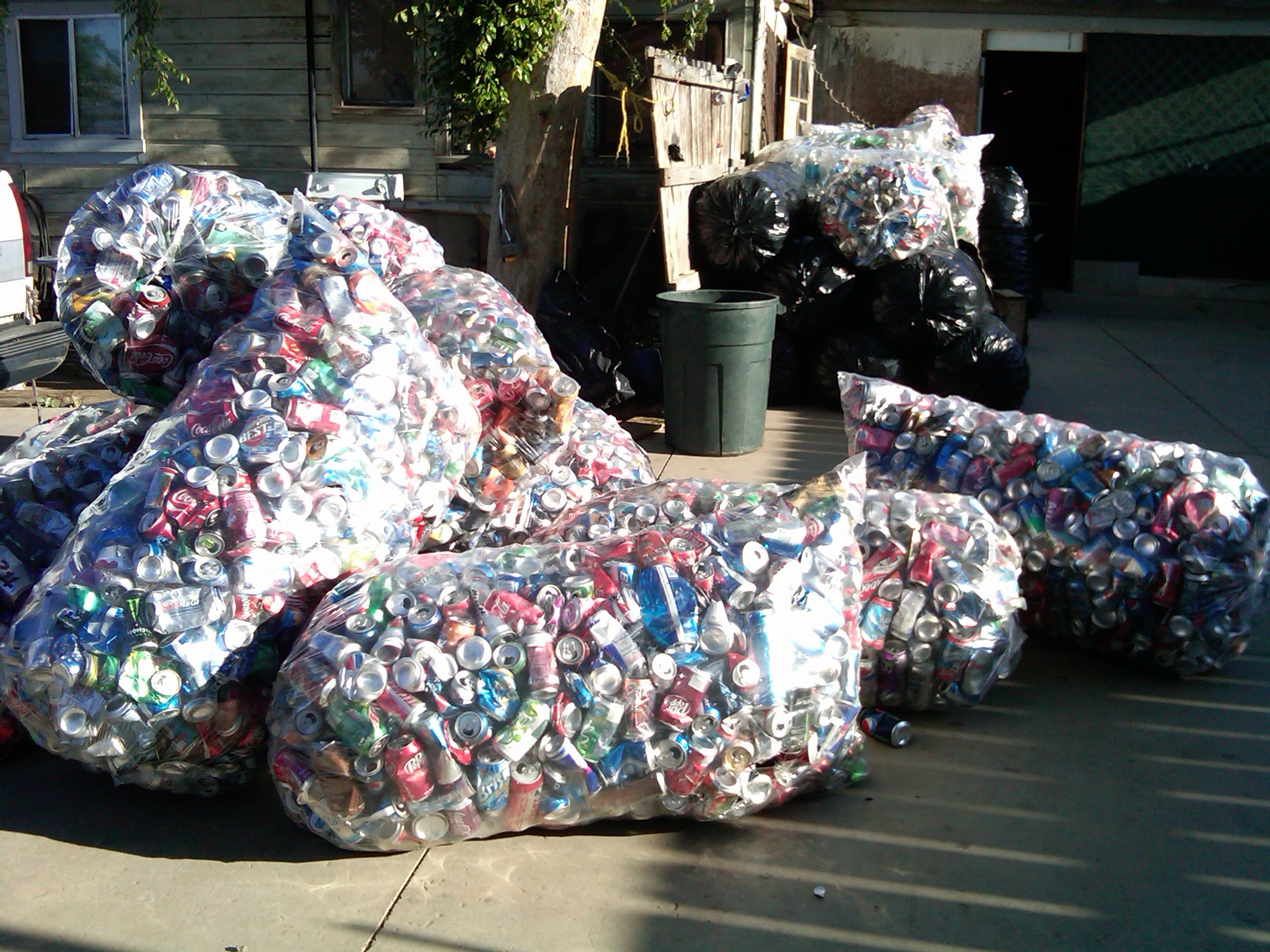
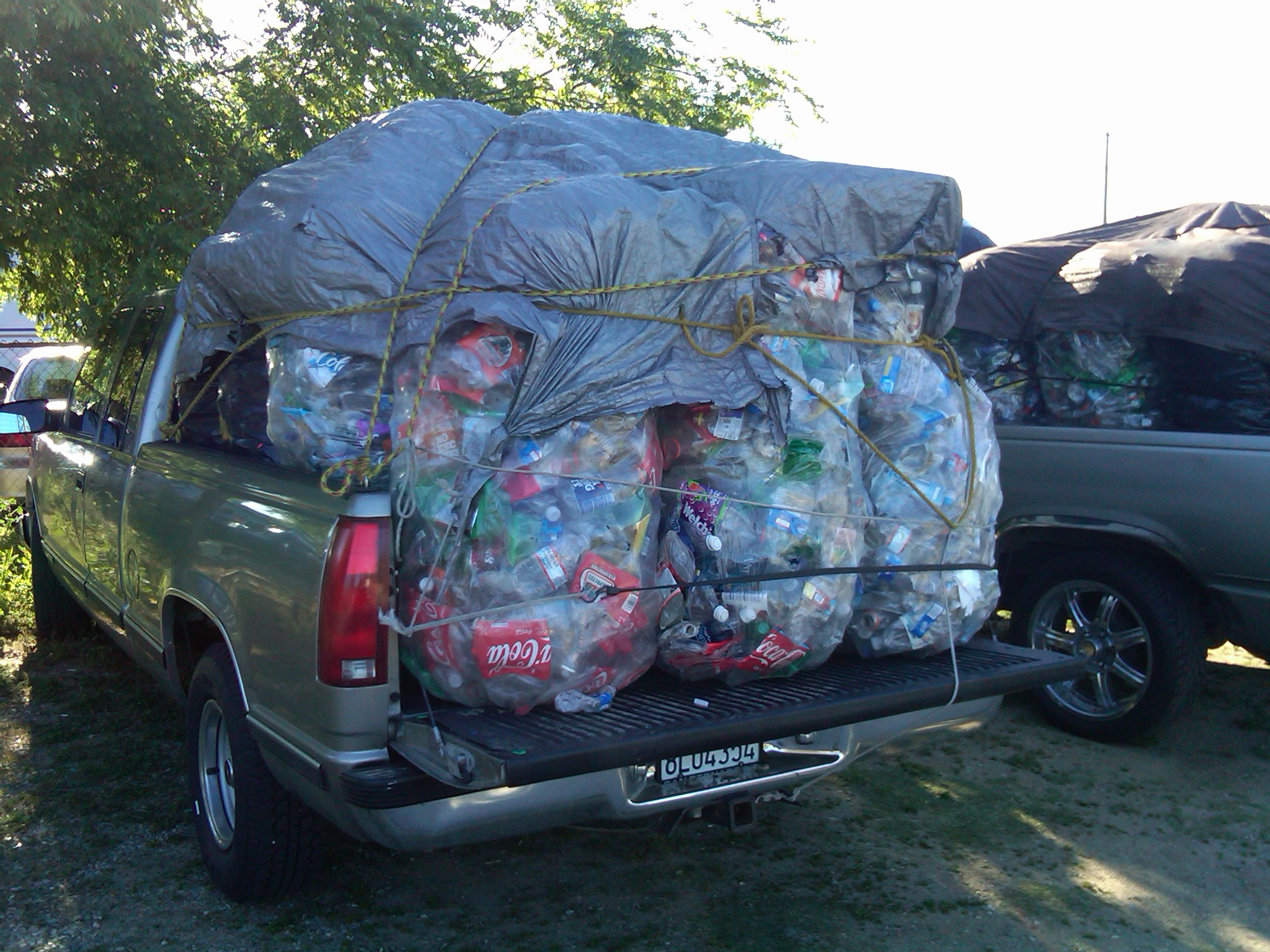
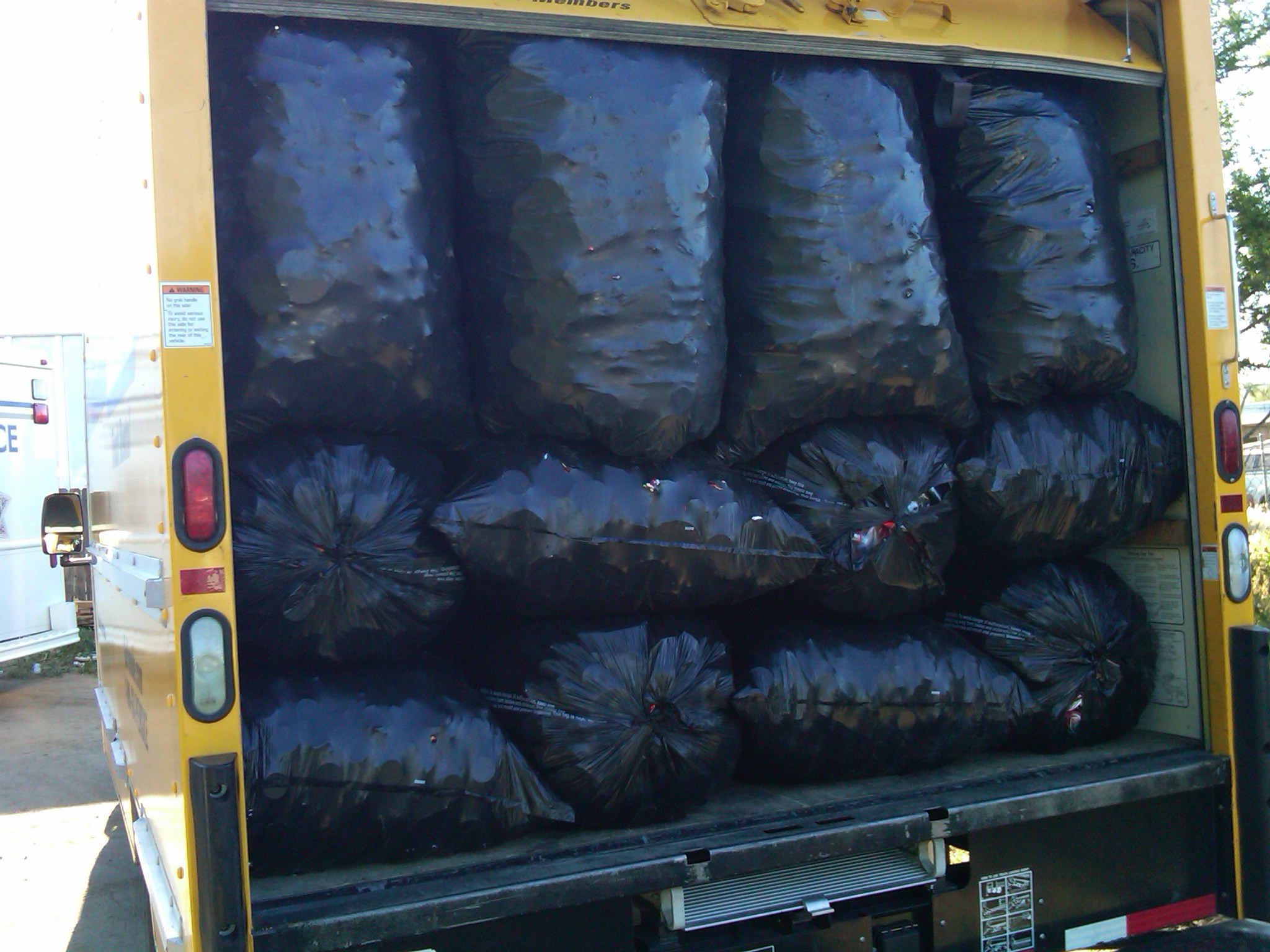
SACRAMENTO – Attorney General Edmund G. Brown Jr. announced today that special agents with the Department of Justice, working closely with the Department of Resources Recycling and Recovery (CalRecycle), have shut down three beverage-container recycling fraud rings in which rogue entrepreneurs trucked millions of cans and bottles from Arizona and Nevada to illegally claim California Redemption Value (CRV) refunds.

In total, the fraud rings robbed the state of more than $3.5 million used to operate the state’s recycling program as well as to promote recycling throughout California. Thirty-one individuals have been arrested in connection with these fraudulent activities.

“These bands of thieves have been caught red-handed running tons of cans and bottles from across the state’s border and fraudulently collecting money through the California Redemption Value program,” Attorney General Brown said. “Defrauding the state’s recycling program is not a way to make easy money. We are looking for you and you will be caught.”

Conviction of redemption fraud and the importation of recyclable materials is a felony if the redemption amount is over $400.

In one case originating in Nevada, a ring imported to California 1.6 million pounds of cans and bottles – enough, if not compacted, to fill 464 18-wheelers.

In another case, cans were not only hauled from the Phoenix area to Moreno Valley for the CRV deposit, they were filled with sand to add weight for an increased deposit return.

In a third case, agents looking for one recycling fraud suspect along Interstate 8 observed yet another truck carrying thousands of cans. That observation spurred a two-month investigation, resulting in the arrest of the owner of a recycling center and three other suspects.

California is one of 11 states with a bottle and can redemption program. Among its neighbors, Oregon has a program, but Nevada and Arizona do not. When a person purchases a bottle or can in California, the CRV is paid at the checkout stand. When the container is redeemed at one of the state’s 2,000 recycling facilities, the CRV is returned to the consumer. For beverage containers weighing less than 24 ounces, the CRV is 5 cents; for containers 24 ounces and greater, the CRV is 10 cents. For aluminum, the CRV equals $1.57 per pound.

When an out-of-state can or bottle is fraudulently redeemed in California, the program loses money because money is paid out for a container for which the CRV was never paid. This robs the CRV program, which relies on unclaimed CRV to administer the program and support a variety of activities that promote recycling across the state.

"Recycling fraud is a crime against California consumers and we take it very seriously,' said CalRecycle Director Margo Reid Brown. 'Our inspectors work closely with state and local law enforcement to root out and prosecute criminals who steal the money used to repay Californians and support our state's recycling programs. These arrests are evidence that recycling fraud will not be tolerated.'

California’s program began in 1987, following legislation passed in 1986. Today, about 80 percent of bottles and 84 percent of aluminum cans purchased in the state are returned for recycling.

“Californians are doing a great job recycling their bottles and cans,” added Attorney General Brown. “We don’t want people intent on committing recycling fraud to harm a program that is working well.”

To combat recycling fraud, CalRecycle staff visits major recycling processors to inspect loads of beverage containers delivered for CRV reimbursement. In 2009, the department removed 25 recycling centers from the state program for submitting fraudulent claims. CalRecycle refers recycling fraud cases to the Department of Justice for criminal investigation and prosecution.

Here’s how the three recycling fraud rings were broken up in April by the Department of Justice:

1. Department of Justice special agents observed Mariano Dejesus-Solis collecting and storing recyclable materials at his Las Vegas residence, as well as at several storage facilities in North Las Vegas. Twice a week, Dejesus-Solis and his accomplices drove 16-foot and 24-foot rental trucks filled with approximately 5,000 pounds of aluminum cans and bottles to a storage facility in Montclair (San Bernardino County) where the loads were parceled out to accomplices who would take them to recycling centers. The group defrauded the CRV program an estimated $2.5 million by illegally importing more than 1.6 million pounds of cans and bottles. On April 8, 15 suspects were arrested in Riverside and San Bernardino counties, with assistance from local law enforcement.

2. In the Phoenix area, a group collected used beverage containers from consumers and purchased some from recycling centers at a reduced rate and then transported them to a residence in Moreno Valley (Riverside County). Daily, members of this group took multiple smaller loads to the Perris Valley Recycling Center (Riverside County) to redeem the CRV refund, defrauding the CRV fund an estimated $1 million. On April 20, a search warrant resulted in the seizure of 50,000 pounds of bottles and cans, with an estimated CRV value of $100,000. Many cans contained sand to add weight. Twelve people were arrested.

3. On Interstate 8 near Winterhaven, Calif. and Yuma, Ariz. agents with the Imperial County and San Diego Major Crimes Teams were looking for a CRV fraud suspect when they encountered another suspected CRV fraud ring -- two men transporting a large quantity of aluminum cans in a truck. This observation launched a two-month investigation, with assistance from CalRecycle, which resulted in the April 23 arrests of four people, including Michael Barshak, the owner and operator of ACE Recycler, a recycling center in San Diego. Agents have initially estimated that the ring’s operation, which spanned four months, transported 40,000 pounds of cans with an approximate value of $135,000.

These investigations were conducted by the Attorney General’s Division of Law Enforcement/Bureau of Investigation and Intelligence (DLE-BII) Major Crimes Team and CalRecycle, with assistance from many other law enforcement agencies including the offices of the San Bernardino and Riverside County Sheriffs, the Riverside County District Attorney’s Office, the California Highway Patrol, Immigration and Customs Enforcement, the United States Marshals Service and other Dept. of Justice enforcement teams.

To learn more about CalRecycle and the California Beverage Container Recycling Program, visit http://www.calrecycle.ca.gov/. CalRecycle contact: Mark Oldfield (916) 319-9942 or mark.oldfield@CalRecycle.ca.gov.

Photos and a list of arrestees are attached.

Brown Announces Huge Rebate to California Consumers Who Were Victims of the 2000-2001 Energy Crisis

April 28, 2010
Contact: (916) 210-6000, agpressoffice@doj.ca.gov

SAN DIEGO — Attorney General Edmund G. Brown Jr. today announced settlements that will bring $400 million in refunds for California consumers who were victimized by market manipulation and exorbitant prices during the energy crisis of 2000-2001.

The two-part agreement with San Diego-based Sempra Energy will provide reimbursement of $270 million to California utility customers who each month pay off debt from the utility crisis on their gas and electric bills. Sempra will also pay $130 million to consumers to settle separate claims by the state Public Utilities Commission and the Department of Water Resources.

“The settlements,” Brown said, “will put hundreds of millions of dollars back into the pockets of California energy consumers who suffered blackouts and great economic harm during the energy crisis.”

Including the prior settlement of a class-action suit, Sempra has now paid more than $700 million for the benefit of state utility customers.

During the energy crisis, Enron, Sempra and other energy companies created phony energy shortages, blackouts and record high energy prices. As a result, California’s two largest utilities, PG&E and Southern California Edison, became insolvent, forcing the state to spend billions of dollars for huge amounts of emergency power to keep the lights on.

In legal documents, Sempra was accused of “Enron-style gaming” of the energy markets and “a pervasive pattern of market manipulation and abuse.” It was accused of entering “Enron-style partnerships” that had a destructive impact on the market, driving prices higher and reducing energy availability and reliability. It was accused of a variety of other exotic schemes called “False Import, Paper Trading and Circular Scheduling” to short-circuit the proper functioning of energy markets.

Customers of PG&E, Southern California Edison and San Diego Gas and Electric (a subsidiary of Sempra) continue to pay for the energy crisis in a line item on their utility bills labeled “DWR bond charge.” Funds received in the settlements will go toward reducing those costs to ratepayers.

For the past nine years, the Attorney General has investigated, litigated and negotiated with Sempra and other energy sellers whose misconduct caused the energy crisis.

The Sempra settlement is the latest of 39 settlements hammered out by the Attorney General, in co-operation with the Public Utilities Commission, Department of Water Resources, PG&E, and Southern California Edison, that will provide more than $3 billion in ratepayer relief. The Attorney General continues to press California’s claims for compensation to ratepayers for overpriced energy sold to the state.

Brown Removes Pollution-Causing Products from Store Shelves

March 16, 2010
Contact: (916) 210-6000, agpressoffice@doj.ca.gov

Oakland—Attorney General Edmund G. Brown Jr. today announced a court judgment against Pro’s Choice Beauty Care, Inc., a New York-based hair care product distributor, blocking the company from selling “pollution-causing” products that also exacerbate respiratory illnesses.

The judgment also requires the retailers Rite Aid, Long’s Drug Stores, CVS Pharmacy, Walgreen Company, Ralphs Grocery Company, Kmart and Target to remove these products at all California stores.

“Pro’s Choice sold thousands of containers of pollution-causing hair products to consumers who unknowingly exposed themselves and the environment to harmful pollutants,” Brown said. “Today’s agreement will remove products from store shelves that pollute our air and exacerbate respiratory diseases such as asthma.”

Pro’s Choice, the largest distributor of professional hair care and nail products in the country, buys U.S. brand-name products overseas and re-imports the products to sell them below suggested retail value. The products are then redistributed to pharmacies, grocery chains, and wholesale clubs throughout the country.

In late 2006, the California Air Resources Board (CARB) and several district attorneys notified Brown’s office that many products supplied by Pro’s Choice contained air contaminants well above the state’s limits on volatile organic compounds (VOCs.) Despite numerous tests and repeated violations and requests for compliance, Pro’s Choice continued to sell these products to retailers.

Brown’s office filed a lawsuit against the company in 2008. The company was charged with violating California’s Health and Safety Code 42400 et seq., which protects air quality and prevents companies from intentionally discharging pollutants into the air.

VOCs significantly contribute to the formation of smog. Under California law, depending on whether the product is a hair spray, mousse, gel or styling product, each must meet California’s stringent standards for VOC content. According to the American Lung Association’s 2009 State of the Air Report, California has five of the top-ten worst smog areas and the highest rate of asthma in the country.

Some of the non-compliant products Pro’s Choice resold to retailers include:

• Big Sexy Hair Dense at a Target in Modesto, CA;
• Redken Fabricate at a RiteAid in Modesto, CA;
• Sebastian Threads Microber Cream at a K-Mart in Lodi, CA;
• Sebastian Shaper Plus at Ralphs in Sacramento, CA;
• John Paul Mitchell Freeze and Shine Super Spray Firm Hold at Longs in Stockton, CA; and,
• Short Sexy Hair Hard Up Gel at Rite Aid in Torrance, CA.

Today’s judgment requires Pro’s Choice to:
• Stop selling or distributing products that violate the limits of VOCs;
• Pull all of the products found in violation;
• Identify and sort products that are non-compliant before distributing them for sale in California;
• Obtain written verification from the manufacturer that the product is compliant or test representative samples from the batch; and,
• Pay $1.25 million in penalties and costs.

A copy of the Stipulation for Entry of Judgment and Permanent Injunction is attached.

Brown Forges Deal with Toyota to Help Consumers While Recalled Vehicles are Repaired

February 26, 2010
Contact: (916) 210-6000, agpressoffice@doj.ca.gov

Los Angeles—Attorney General Edmund G. Brown Jr. today announced that his office has reached an agreement with Toyota Motor Sales USA, Inc. to provide California Toyota owners with at-home pickup and vehicle return and cost-free alternative transportation while their recalled vehicles are being repaired.

“This agreement goes a long way towards easing the burden caused by Toyota’s massive recall,” Brown said. “It will now be much easier for Toyota owners to get to work and take their kids to school while critical safety repairs are made on their cars.”

Under the terms of today’s agreement, Toyota will provide owners of recalled vehicles the following services:
• Pick-up and return of vehicles by the dealership;
• Transportation to the dealership and/or to the owner’s place of work;
• Alternative transportation, such as a rental car, loaner vehicle or taxi reimbursement for a reasonable period that the customer is unable or unwilling to use his or her car; and
• Expedited scheduling for repair services.

These services will be provided by Toyota through the dealers at no cost to either the owners or the dealer.

The following Toyota vehicle recalls are covered by today’s agreement:
• September 29, 2009 for floormat entrapment;
• January 21, 2010 for sticking accelerator pedals;
• February 8, 2010 for anti-lock brake system issues; and
• February 12, 2010 for drive-shaft failure.

The following vehicles are involved in the recent Toyota and Lexus vehicle recalls: 2005-2010 Avalon, 2007-2010 Camry, 2009-2010 Corolla, 2007-2010 ES 350, 2008-2010 Highlander, 2006-2010 IS 250 and IS350, 2009-2010 Matrix, 2004-2009 Prius, 2010 Prius, 2009-2010 RAV4, 2008-2010 Sequoia, 2005-2010 Tacoma, 2007-2010 Tundra, 2009-2010 VENZA, and 2010 HS 250h.

More information on the specific vehicles affected by the recalls can be found at www.nhtsa.dot.gov and www.toyota.com/recall.

Californians are encouraged to contact their local Toyota and Lexus dealers if they believe they are eligible for these accommodations. Consumers can also contact Toyota’s customer service center at 1-800-331-4331 or Lexus at 1-800-255-3987.

This agreement will remain in place until all Toyota vehicles subject to the recall have been repaired. If additional safety recalls arise, an extension of this agreement or other appropriate provisions will be pursued.

Toyota Motor Sales USA, Inc. is based in Torrance, CA.

A copy of Toyota's letter to Brown is attached.

AttachmentSize
PDF icon n1864_toyota_agreement_letter_to_ag.pdf332.65 KB

Brown Issues Warning to Major Retailers Caught Selling Children's Products Containing Excessive Lead

November 17, 2009
Contact: (916) 210-6000, agpressoffice@doj.ca.gov

Sacramento – Attorney General Edmund G. Brown Jr. sent a letter last week to six major retailers, warning them that a number of children’s products on their store shelves were found to contain “illegal levels of lead” and to pull the products from their stores immediately.

“Private testing uncovered a number of products designed for children that contain dangerous and illegal levels of lead,” Brown said. “These products must be removed from store shelves at once to protect our kids from toxic lead exposure.”

Children are particularly susceptible to the risks of lead exposure, which can damage the nervous system and other organs. Children are exposed by ingesting the lead when they put the products in their mouths, handle them and then touch their mouths, or transfer the lead from the products to food.

Any children’s product that contains more than 300 parts per million (ppm) of lead is considered a hazardous substance and therefore illegal to sell in the state. The following products were found to contain excessive levels of lead:

• Kids Poncho sold by Walmart, 677 ppm;
• MSY Faded Glory Rebecca Shoes sold by Walmart, 1331 ppm;
• Reversible Croco Belt sold by Target, 4270 ppm;
• Dora the Explorer Activity Tote sold by TJ Maxx, 2348 ppm;
• Paula Fuschia Open-Toed Shoes sold by Sears, 3957 ppm;
• Disney Fairies Silvermist’s Water Lily Necklace sold by Walgreens, 22000 ppm;
• Barbie Bike Flair Accessory Kit sold by Tuesday Morning, 6196 ppm.

Brown has also requested that the companies provide his office with results from any of their own tests conducted on the products and report how they plan to ensure that other items do not contain toxic quantities of lead.
Brown has reported the findings to the federal Consumer Product Safety Commission, which could order a recall of the products.

In 2008, Brown’s office reached a settlement with several major toy companies over excessive levels of lead in their products. The settlement allocated $548,000 in funding for consumer safety groups to monitor lead levels in consumer goods and to provide outreach about product recalls. The Center for Environmental Health discovered the current violations with a grant from the Public Health Trust, which administers the settlement fund.

"Based on our testing, it appears there are fewer problem toys on store shelves this year. But parents should know that some children's products still contain high levels of lead,' said Michael Green, Executive Director of the Center for Environmental Health. 'After all the attention to lead-tainted toys, manufacturers and retailers still need to do more to keep lead out of our kids' hands.'

A sample copy of the letter:

November 13, 2009

Dear Retailer:

We just received a report about a children’s product purchased in your store in Richmond, California that contains illegal levels of lead. The lead levels reported exceed the limits in the federal Consumer Product Safety Improvement Act (“CPSIA”). Furthermore, selling the product without a proper warning likely violates California’s Safe Drinking Water and Toxic Enforcement Act of 1986, commonly known as “Proposition 65.” We are writing to ask that you stop selling the product immediately and take other corrective action as needed.

The children’s product is a Cherokee brand reversible “Croco” belt, Style 1139915TG, purchased at your store in Richmond on September 27, 2009. The SKU is 492020800102. Our internal reference number is PHT 082. Please use it in communications with our office about this. We have enclosed photographs of the product.

The item was purchased by an investigator for the Center for Environmental Health, using a grant from a fund administered by the Public Health Institute. The fund was established through a Proposition 65 settlement between our office and several companies over lead in toys. (People v. Mattel et al., Alameda County Super. Ct., Civ. No. RG 07-356892.) After screening the product for lead, the Center for Environmental Health sent a sample to a federally-approved laboratory for further testing. The test results, which are enclosed, indicate 4,270 parts per million (“ppm”) lead in the black artificial leather on the front surface of the belt. This exceeds federal lead limits, which deem a children’s product with more than 300 ppm lead in an accessible component a “banned hazardous substance.” It also appears to violate Proposition 65, which requires a clear and reasonable warning prior to exposing persons to known carcinogens and reproductive toxins, including lead. (Cal. Health & Saf. Code, § 25249.6; Cal. Code Regs., tit. 27, § 27001.)

Lead is a toxic metal that damages the nervous system and other organs. Even at low levels of exposure, lead can impact brain development in children. Based on what appears to be violations of federal and state law, you should stop selling the product immediately. Additionally, please send us any test results you have and any representations from the manufacturer or supplier about the lead content in the product. Please contact us immediately so we can discuss what further actions your company intends to take.

Sincerely,

EDMUND G. BROWN JR.
Attorney General

Brown Wins $19.5 Million Judgment Against Shell Oil Co. for Environmental Violations at its Gas Stations

November 6, 2009
Contact: (916) 210-6000, agpressoffice@doj.ca.gov

Oakland – After finding “hundreds of environmental violations” at Shell gasoline stations statewide, Attorney General Edmund G. Brown Jr. today announced that his office has secured a $19.5 million judgment against the oil company and its affiliates, which will ensure compliance with the state’s hazardous waste and underground fuel storage laws.

“Shell Oil Company disregarded the state’s underground fuel storage and hazardous waste laws, committing hundreds of environmental violations at its gasoline stations across California,” Brown said. “This judgment requires the company to pay $19.5 million in penalties, comply with state law and improve its spill monitoring, employee training and hazardous waste management.”

In 2006, the Attorney General’s Office launched a statewide investigation into Shell and its gasoline stations after the San Diego and Riverside County District Attorneys settled cases with the company following numerous underground fuel storage violations.

Working with the California State Water Resources Control Board, the Attorney General’s Office investigated more than 1,000 Shell gasoline stations throughout California.

The investigation uncovered hundreds of violations at the company’s gasoline stations. For example:

• In February 2007, an inspector discovered that a Shell gasoline station located at 4355 Pacheco Blvd. in Martinez failed to properly maintain the required leak detection monitoring system for its gasoline tanks. The Shell station is located next door to the office of the Contra Costa County Hazardous Materials Program.

• In May 2006, an inspector discovered that a Shell gasoline station located at 7899 Greenback Lane in Citrus Heights, 20 miles northeast of Sacramento, failed to properly maintain spill alarms for its gasoline tanks. Inspectors observed similar violations in October 2005, September 2003 and April 2003.

• In August 2005, an inspector discovered that a Shell gasoline station located at 12398 Los Osos Valley Rd. in San Luis Obispo failed to maintain the required leak detection monitoring system for its gasoline tanks.

• In March 2005, an inspector discovered that a Shell gasoline station located at 30245 Agoura Rd. in Agoura Hills failed to properly conduct and maintain secondary containment testing and monitoring for its gasoline tanks. The inspector also found liquid and hazardous substances in the containment sump. Shell’s own inspector found liquid in the sump on previous visits to the station.

The judgment requires Shell, its subsidiaries, corporate parents, affiliates and successors to pay $19.5 million in civil and administrative penalties and immediately comply with state underground fuel storage and hazardous waste statutes, regulations and permits.

The company must also take immediate steps to improve spill and alarm monitoring, employee training, hazardous waste management and emergency response at its gasoline stations by:

• Implementing a “smart” monitoring system with programmable sensors to monitor for fuel leaks and other environmental alarms;
• Utilizing a continuous remote alarm monitoring, diagnosis and notification system;
• Providing annual compliance and emergency response training sessions to employees, contractors, consultants, retailers and operators;
• Implementing risk management software systems to drive improved underground storage tank compliance;
• Working with a third-party contractor to manage and oversee Hazardous Material Business Plans and Underground Storage Tank Monitoring Response Plans;
• Working with a third-party contractor to provide onsite underground storage tank permitting, registration and testing services;
• Completing a health, safety, security and environmental checklist to monitor, assess and address compliance issues; and
• Maintaining an underground storage tank equipment database and checklist.

Brown has taken aggressive action to stop violators of California’s underground fuel storage and hazardous waste laws:

• In August, Brown and eight district attorneys reached an agreement requiring U-Haul Co. of California to improve the way it handles and disposes of hazardous materials at its 179 regulated facilities throughout the state;
• In June, Brown joined 20 district attorneys and the Los Angeles City Attorney in a suit against Target Corp. to block the retailer from continuing to illegally dump hazardous waste in local landfills;
• In June, Brown and three district attorneys forged a settlement with Kmart requiring the company to stop disposing toxic substances in landfills and pay more than $8.65 million in civil penalties, costs and funding for projects to improve environmental protection in California;
• In April, Brown filed suit against TravelCenters of America – a national gas station chain – to force the corporation to comply with California’s underground fuel storage laws.

The $19.5 million judgment includes: $7.8 million in civil and administrative penalties to district attorneys and regulatory agencies; $5 million in civil penalties to the Attorney General’s Office; $5 million in civil and administrative penalties to the California State Water Resources Control Board; $700,000 to fund the Sacramento County Abandoned Well Restoration Project; $500,000 to the California Climate Action Registry; $400,000 in investigative costs and attorneys’ fees to the Attorney General’s Office; and $100,000 in investigative costs to the California State Water Resources Control Board.

The complaint, stipulated judgment and order, signed in Alameda County Superior Court, are attached. Included in the stipulated judgment is a full list of the Shell gasoline stations subject to the terms of the settlement.

Statement on Second Circuit's Long-Awaited Ruling on Power Plant Nuisance Case

September 21, 2009
Contact: (916) 210-6000, agpressoffice@doj.ca.gov

'This case is a critical milestone, allowing global warming cases to be decided by the courts, just as they decide complex water pollution, air pollution, and toxic dumping cases,' Attorney General Jerry Brown said. “It’s highly significant that the federal court has affirmed the right of states to challenge the greenhouse gas emissions generated by coal-fired power plants. The time has now come for Congress to enact long overdue climate protection legislation.”

AttachmentSize
PDF icon Court of Appeals Ruling610.25 KB

Brown and 8 District Attorneys Force U-Haul to Improve Handling of Hazardous Materials

August 21, 2009
Contact: (916) 210-6000, agpressoffice@doj.ca.gov

Oakland – Attorney General Edmund G. Brown Jr. and eight District Attorneys today reached an agreement requiring U-Haul Company of California to “clean up its act” and improve the way it handles and disposes of hazardous materials at its 179 regulated facilities throughout the state.

“U-Haul has turned a blind eye to California’s hazardous materials laws for years, even after an explosion and fire severely damaged one of its facilities,” Brown said. “This agreement forces U-Haul to clean up its act and improve the way it handles hazardous materials, plans for emergencies and trains employees.”

U-Haul’s hazardous materials practices first came under scrutiny in November 2004, following an explosion and two-alarm fire at a Santa Rosa facility, which resulted in flash burns to an employee.

The emergency response team that arrived on the scene had difficulty assessing the situation due to the lack of information about stored hazardous materials. The facility had no site map indicating where hazardous materials were stored as required by law, and employees had failed to properly label flammable materials including gasoline. The building was damaged in the fire and ultimately closed.

Subsequently, the Attorney General’s office and 8 District Attorneys launched a 2-year statewide investigation into U-Haul’s handling of hazardous materials and training of employees. The investigation revealed violations at virtually all of U-Haul’s 179 California regulated facilities. Despite being repeatedly notified of the violations, U-Haul did not address them.

Such violations include:

• Inadequate training regarding handling of hazardous materials and hazardous materials business plans;
• Improper storage of hazardous waste such as oil filters and pans, waste gasoline and car batteries;
• Improper transport of hazardous waste; and
• Lack of statutorily mandated hazardous material business plans and emergency response plans.

The Attorney General’s office, joined by the District Attorneys of Sonoma, Alameda, Sacramento, San Joaquin, Solano, San Francisco, Santa Clara and Riverside, filed suit on July 27, 2006, seeking penalties and a permanent injunction to enforce compliance with hazardous materials and hazardous waste laws.

Today’s agreement resolves the lawsuit and requires U-Haul to:
• Complete and maintain statutorily mandated hazardous material business plans and emergency response plans for regulated facilities;
• Train its employees how to properly handle hazardous materials;
• Retain an environmental coordinator who will oversee, monitor and submit annual reports on the company’s compliance;
• Inspect hazardous waste storage areas at regulated facilities on a weekly basis;
• Properly transport hazardous waste; and
• Pay $2 million in costs and penalties.

This settlement, filed in Alameda County Superior Court, is attached.