Hospice Fraud

Hospice fraud occurs when hospice providers take advantage of the hospice system for financial gain. Hospice fraud has become an epidemic in California, specifically in the greater Los Angeles area. This has become an alarming problem that goes against everything hospice care is meant to be — it can seriously harm patients and cost taxpayers through false billings to Medi-Cal.

Since Attorney General Bonta took office, California DOJ has:

  • undertaken 294 hospice related investigations,
  • filed 119 hospice related criminal cases, and
  • secured 51 hospice related convictions.

Building on its efforts to combat hospice fraud, California DOJ’s hospice fraud initiative aims to empower patients, families, law enforcement, and healthcare providers with the knowledge needed to recognize and report fraudulent practices in the hospice care system. The initiative includes:

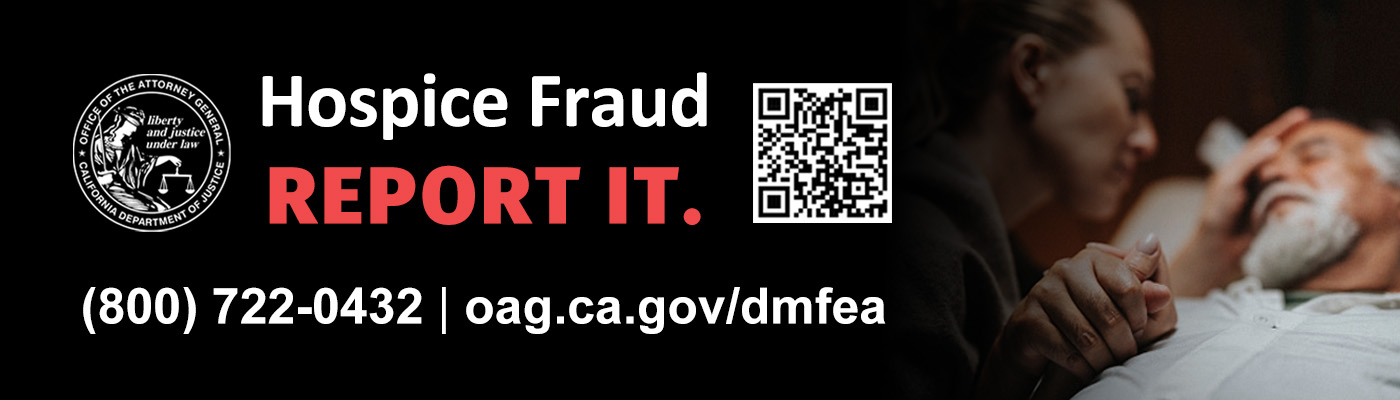
  • Educational materials: Public service announcements and informational materials through billboards and radio spots across the Los Angeles area.
  • Community forums and stakeholder engagement: Sessions led by California Department of Justice Division of Medi-Cal Fraud & Elder Abuse’s legal experts to help law enforcement and healthcare professionals recognize and respond to hospice fraud.
  • Support services: A dedicated helpline and web portal for reporting suspected fraud and online resources and guides for patients and caregivers.

If you or a loved one is receiving hospice care, here are some red flags that could signal fraud:

Little or No Care Is Actually Being Provided

  • The patient isn’t getting regular visits from nurses, aides, or caregivers.
  • The patient is not receiving medication, nutrition, or other promised services or equipment.
  • Scheduled visits are missed often or happen at odd or inconsistent times.
  • The hospice team rarely checks in or is hard to reach.

The Patient Doesn’t Seem That Sick

  • The patient was signed up for hospice but doesn’t appear to have a life-limiting illness.
  • The person can still do most of their usual daily activities with no major changes.
  • There’s no clear diagnosis explaining why hospice was recommended.

No One Explained What Hospice Really Is

  • The family or patient didn’t fully understand that hospice is for end-of-life care.
  • Hospice services started without a clear referral or explanation from the patient’s regular doctor.

You Were Offered Gifts or Incentives

  • Someone offered you gift cards, groceries, or cash in exchange for signing up.
  • The offer felt too good to be true or came from someone you didn’t know.

Hospice Services Are Dragging on Without Updates

  • The patient has been in hospice care longer than six months with no change or discussion.
  • There’s no clear plan for care, and no one is talking about the next steps.

Something Feels Off

  • The staff seem rushed, unprofessional, or poorly trained.
  • You’re getting bills or Medi-Cal statements for services that don’t match what’s happening.
  • You or your loved one feels pressured to stay enrolled, even if it doesn’t feel right.

To report suspected hospice fraud:

  • Submit a Complaint Online
  • Call the Attorney General's Division of Medi-Cal Fraud & Elder Abuse Complaint Line Toll-free at: (800) 722-0432
  • Send a Written Complaint by Mail:
    California Department of Justice
    Division of Medi-Cal Fraud Elder Abuse
    P.O. Box 944255
    Sacramento, CA 94244-2550